


The Technology Stack Behind London’s Leading Commercial Cleaning Companies in 2026
Author: Colin Pepper, Strategic Project Manager
How AI scheduling, co-botics, IoT monitoring and real-time dashboards are reshaping commercial cleaning across London’s most complex estates.
For many years, commercial cleaning was viewed as a labour-intensive service where success depended largely on workforce scale, supervision and scheduling discipline. While those factors remain critical, the reality in 2026 is very different.
Today, the most successful commercial cleaning companies in London are increasingly distinguished not just by the people they employ, but by the technology they deploy. From AI-powered scheduling platforms and collaborative cleaning robots to IoT-enabled consumable monitoring and real-time performance dashboards, technology has become a genuine competitive advantage.
For occupiers, landlords and facilities managers responsible for complex estates, the question is no longer whether technology should be part of a cleaning contract. The question is whether your cleaning partner has the expertise, infrastructure and operational maturity to use it effectively.
Why Technology Matters More Than Ever
The demands placed on commercial buildings have evolved dramatically over the last decade. Occupiers expect higher standards of cleanliness, sustainability targets continue to tighten, labour shortages remain a challenge across multiple sectors, and facilities teams are under increasing pressure to demonstrate value through measurable outcomes.
As a result, cleaning providers are being asked to deliver greater visibility, improved productivity, consistent service quality, enhanced sustainability performance, better occupant experiences, and data-driven reporting.
Achieving these objectives at scale is difficult using traditional cleaning models alone. Technology bridges that gap. The leading London cleaning providers are now combining skilled operatives with intelligent systems that improve efficiency, create transparency and allow decisions to be made using real-time operational data.
AI-Powered Scheduling: The Engine Behind Operational Excellence
Scheduling has always been one of the most complex aspects of commercial cleaning. Large London estates often involve multiple buildings, varying occupancy patterns, specialist requirements, changing event schedules and hundreds of operatives working across different shifts. Historically, much of this planning relied on manual processes, spreadsheets and reactive management. In 2026, artificial intelligence is transforming workforce deployment.
What AI Scheduling Actually Does
Modern workforce management platforms can analyse huge volumes of operational data, including footfall trends, building occupancy, historical cleaning requirements, shift patterns, service-level agreements, absence data, and seasonal variations. The system then recommends optimal staffing levels and schedules based on real demand. Rather than assigning resources based on assumptions, cleaning providers can allocate labour where it is genuinely needed.
The Benefits for Clients
More responsive service delivery. Cleaning schedules can automatically adapt to changing building usage rather than remaining fixed throughout the year.
Improved productivity. Teams spend more time delivering value and less time travelling between tasks or waiting for instructions.
Reduced waste. Labour hours can be optimised without compromising standards.
Better service consistency. AI-driven scheduling reduces the risk of missed tasks, duplicated work and resource gaps.
At JPC by Samsic, technology-enabled workforce planning plays a key role in supporting some of London’s most complex commercial estates. By combining building usage data, cleaning frequencies and operational requirements, management teams can deploy resources more effectively throughout the day, helping ensure service levels remain consistent even in high-traffic environments.
This approach is particularly valuable in multi-tenanted office buildings where occupancy can fluctuate significantly between days of the week. Rather than relying solely on static schedules, data-led resource allocation allows cleaning activity to be aligned more closely with actual building demand.
Co-Botic Floor Care: Where Humans and Robots Work Together
One of the most visible innovations within commercial cleaning is the rise of co-botics. Contrary to popular belief, robots are not replacing cleaning teams. Instead, they are enhancing them. The term “co-botic” refers to collaborative robotics, technology designed to work alongside people rather than replace them. This approach is gaining significant traction across commercial environments, particularly in London’s large office buildings, transport hubs, retail destinations and mixed-use developments.
JPC by Samsic has embraced innovation in floorcare, deploying advanced cleaning equipment across large commercial environments where consistency and efficiency are critical. By combining mechanised and autonomous cleaning solutions with highly trained operatives, teams can maximise productivity while maintaining the detailed, customer-focused service that occupiers expect. The result is a balanced operating model where technology supports people rather than replacing them, freeing operatives to focus on specialist cleaning tasks, customer interaction and quality assurance.
Why Floor Care Is Ideal for Automation
Floor maintenance is one of the most repetitive and time-consuming cleaning tasks. Autonomous scrubber dryers and robotic floor-cleaning machines are now capable of mapping environments, navigating obstacles, cleaning predefined routes, returning automatically to charging docks, recording coverage data, and operating during low-occupancy periods. Many of the latest systems also utilise advanced AI and machine vision technology to optimise routes and improve cleaning efficiency.
The Human Advantage Remains Essential
While robots excel at repetitive tasks, they cannot replicate human judgement, attention to detail and customer interaction. This is why leading providers focus on collaboration rather than replacement. Robotic equipment can manage large expanses of flooring while operatives concentrate on touchpoint cleaning, detail work, washroom servicing, quality inspections, occupant engagement, and specialist cleaning requirements. The result is a more productive workforce capable of delivering higher-value services.
Better Outcomes, Not Lower Standards
When implemented properly, co-botic solutions deliver consistent cleaning quality, improved coverage, greater operational efficiency, enhanced sustainability performance, and increased productivity. Most importantly, they free skilled operatives to focus on areas where people create the greatest value.
Real-Time Reporting Dashboards: Moving Beyond Cleaning on Trust
For decades, many cleaning contracts relied on a simple principle: “We’ve completed the work because we say we’ve completed the work.” That approach is becoming increasingly outdated. Modern clients want evidence. They want visibility. They want access to meaningful operational insights. This is where real-time reporting dashboards have become a defining characteristic of best-in-class service delivery.
What Modern Dashboards Capture
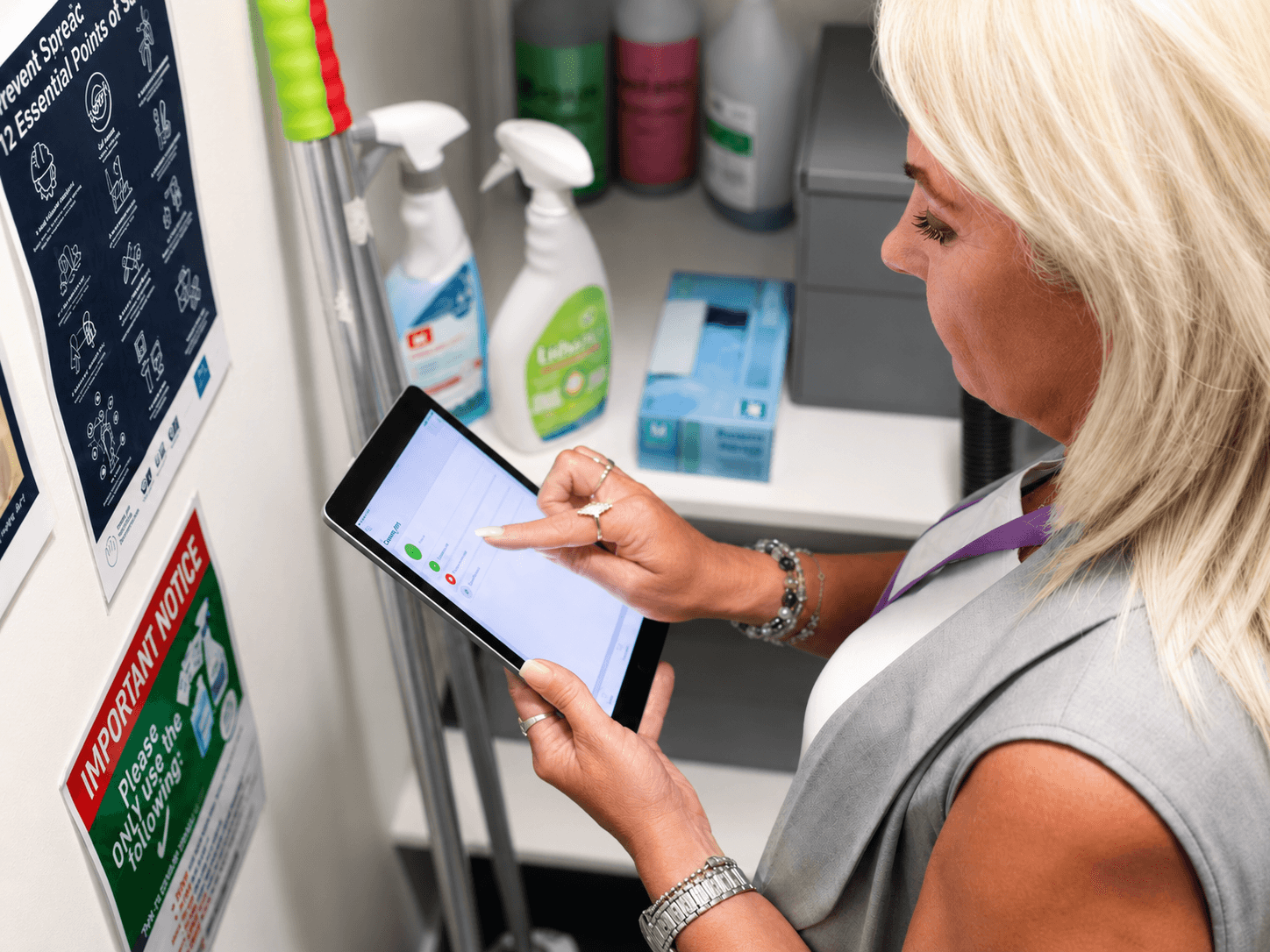
Contemporary cleaning technology platforms can provide live access to data including task completion rates, attendance records, audit scores, cleaning frequencies, incident reporting, asset performance, consumable usage, and compliance records. Rather than waiting for monthly reviews, facilities managers can access information whenever they need it.
Turning Data Into Action
The real value isn’t simply collecting information. The value lies in turning that information into better operational decisions. If audit scores begin to decline in a specific area, management teams can intervene immediately. If footfall increases within a building, cleaning frequencies can be adjusted. If service demand changes, resources can be reallocated accordingly. This creates a far more proactive approach than traditional performance management.
Transparency Builds Trust
For landlords and occupiers managing high-profile London estates, transparency is increasingly important. Service partners that can demonstrate performance through live operational data naturally inspire greater confidence than those relying on manual reports or retrospective explanations.
This level of visibility has become a hallmark of JPC by Samsic’s service delivery model. Clients benefit from transparent reporting systems that provide clear evidence of performance, completed tasks, audits and operational activity. For landmark commercial properties where accountability is paramount, this transparency provides reassurance that agreed standards are being delivered consistently across every area of the estate.
IoT-Enabled Consumable Monitoring: Smarter Washroom Management
One of the most common frustrations in commercial buildings remains surprisingly simple: running out of soap, empty paper dispensers, overflowing waste units. Despite significant investment in workplace experience, these issues continue to affect occupant satisfaction. In 2026, Internet of Things (IoT) technology is helping eliminate these challenges.
What Is IoT Monitoring?
IoT-enabled devices use connected sensors to monitor assets and transmit data automatically. Within commercial cleaning, these sensors are increasingly deployed across washroom environments to monitor soap levels, paper consumption, waste capacity, occupancy data, and usage trends. The system alerts cleaning teams when intervention is required.
Reactive Becomes Proactive
Traditional washroom servicing often follows fixed schedules. The challenge is that usage rarely follows predictable patterns. A washroom may be checked three times in a day despite remaining fully stocked. Meanwhile, another may run out of consumables between scheduled visits. IoT monitoring changes the model entirely. Instead of servicing by assumption, teams service according to actual demand. This enables better occupant experiences, reduced waste, improved efficiency, lower operational costs, and more intelligent resource allocation.
Supporting Sustainability Goals
IoT technology also supports ESG and sustainability objectives. By monitoring actual usage, buildings can reduce unnecessary replenishment cycles and identify opportunities to optimise stock consumption. As commercial buildings become increasingly connected, JPC by Samsic works alongside clients to support smarter facilities management strategies. Data gathered from building systems, occupancy patterns and service activity can be used to inform cleaning schedules and improve responsiveness to changing workplace demands.
Integrating Technology into a Single Ecosystem
The most advanced cleaning operations don’t rely on individual technologies operating in isolation. Instead, they create connected ecosystems. AI scheduling platforms communicate with workforce management tools. Robotic cleaning systems feed performance data into reporting dashboards. IoT sensors generate alerts that automatically trigger service actions. Management teams gain visibility across the entire operation through a single source of truth.
This integrated approach enables faster decision-making, improved accountability and greater operational resilience. As buildings become smarter, cleaning services must evolve alongside them.
What Best-in-Class Looks Like in Practice
The difference between adopting technology and truly leveraging it lies in integration. Many providers can demonstrate a dashboard. Others may have experimented with autonomous equipment or digital auditing tools. However, the most successful cleaning operations combine these technologies into a connected service model that delivers measurable outcomes.
JPC by Samsic provides a strong example of this approach in action. Working across some of London’s most prestigious commercial destinations and landmark estates, the business has built a reputation for combining exceptional people with technology-enabled service delivery. Transparent reporting, digital auditing, operational performance data and innovative cleaning methodologies are embedded into day-to-day operations rather than being treated as standalone features.
This creates greater visibility for facilities managers, stronger accountability across service teams and a more proactive approach to maintaining workplace environments. In an increasingly data-driven property market, this ability to provide operational intelligence alongside cleaning expertise is becoming a defining characteristic of best-in-class service providers.
The Future of Commercial Cleaning Is Data-Driven
As London’s commercial property landscape continues to evolve, cleaning providers will be expected to do more than maintain environments. They will be expected to generate intelligence. Data will increasingly influence how resources are deployed, how performance is measured and how client decisions are made.
AI scheduling, co-botic floor care, real-time reporting and IoT-enabled monitoring are no longer futuristic concepts. They are rapidly becoming standard components of high-performing cleaning operations.
For clients, the implication is clear. Technology should not be viewed as a premium extra reserved for the most prestigious buildings. It should be regarded as a key indicator of operational maturity and service quality. The providers leading the market in 2026 are those using technology to create transparency, drive efficiency and enhance occupier experiences.
And as expectations continue to rise, that capability will become one of the strongest differentiators between average service delivery and truly exceptional commercial cleaning.