


How to Transform Your Workplace into a WELL or Fitwel Certified Healthy Building
Picture your Monday morning. Hundreds of employees commute in, settle at their desks, and spend the next eight to ten hours inside your building. The air they breathe, the light above them, the acoustics around them, the temperature they work in; all of it is shaping how they think, feel, and perform.
Is your building helping them or quietly working against them?
The concept of the ‘healthy building’ has moved well beyond a passing trend. It is fast becoming a business imperative. With talent retention at a premium, ESG commitments under scrutiny, and employees more attuned than ever to their workplace environment, forward-thinking organisations are turning to internationally recognised frameworks – WELL and Fitwel, to demonstrate that their buildings genuinely support the people inside them.
At JPC by Samsic, we work with building owners, occupiers, and facilities teams to make that journey achievable. Here is what you need to know.
What Is a Health Building and Why Does It Matter?
A health building is one that is purposefully designed, operated, and maintained to support the physical, mental, and social wellbeing of its occupants. It goes far beyond regulatory compliance or basic cleanliness. It is about creating an environment that actively contributes to human flourishing.
The business case is compelling. Research consistently shows that:
- Employees in healthier buildings report significantly higher productivity and concentration.
- Absenteeism falls when air quality, lighting, and comfort are optimised.
- Certified buildings attract and retain better talent, particularly among younger professionals who place wellbeing at the centre of their employment decisions.
- Health building credentials are increasingly influencing occupier decisions and asset valuations.
In short: healthy buildings are good for people and good for business. The question is how to get there.
WELL vs. Fitwel: Understanding the Two Leading Frameworks
Two internationally recognised certification systems dominate the healthy building landscape. Both are credible, respected, and increasingly expected by discerning occupiers, but they take different approaches.
WELL Building Standard
Developed by the International WELL Building Institute (IWBI), the WELL standard is the world’s most rigorous and comprehensive framework for human health in the built environment. It covers ten core concepts:
- Air
- Water
- Nourishment
- Light
- Movement
- Thermal Comfort
- Sound
- Materials
- Mind
- Community
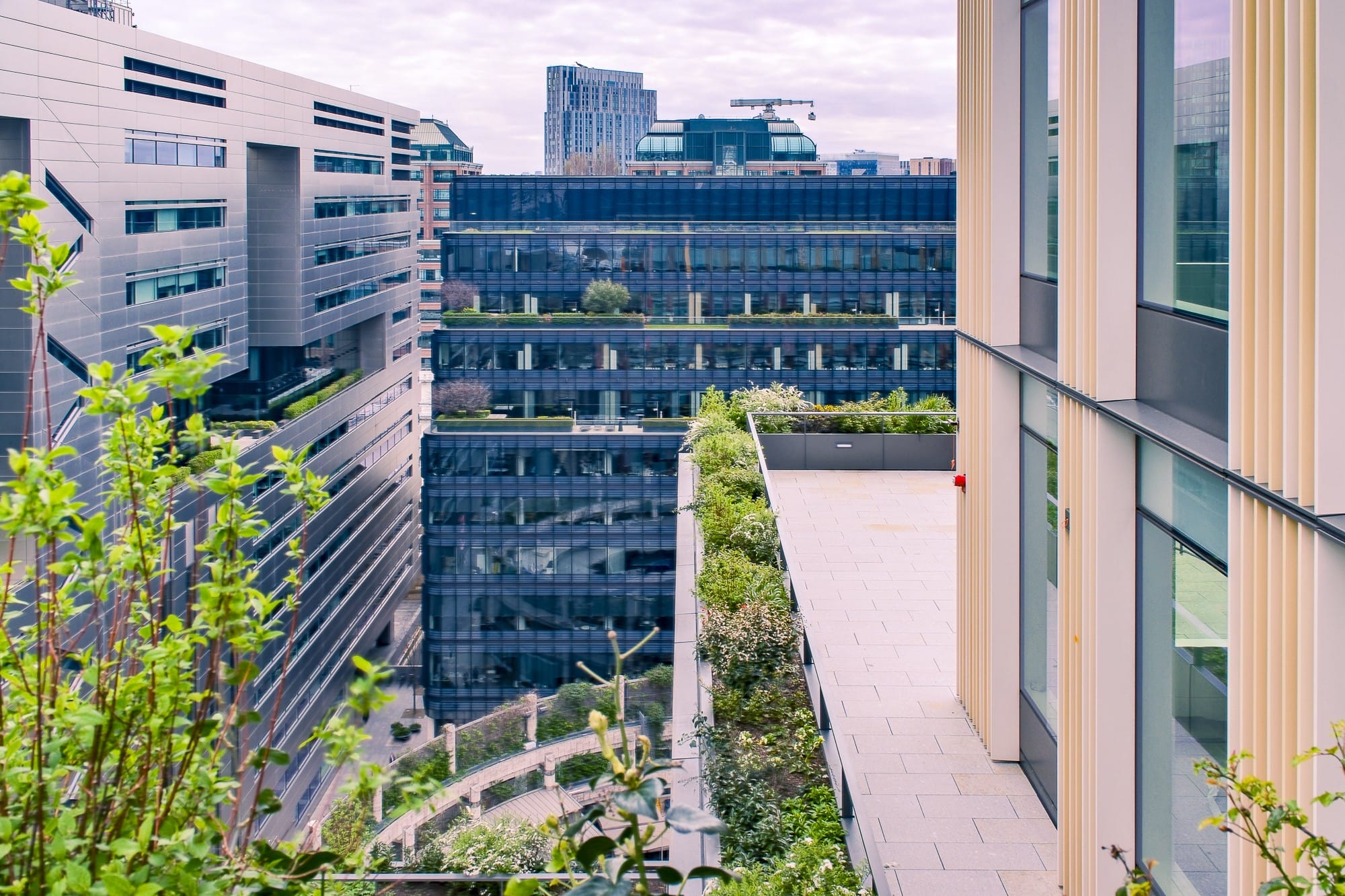
Working in partnership with British Land, JPC by Samsic helps maintain WELL standards at 1 Broadgate through evidence-based, health-focused cleaning operations. Our approach delivers low-VOC routines that protect indoor air quality, non-hazardous products that reduce chemical exposure, and sustainable consumables with a 64% lower carbon footprint than recycled alternatives. Sugarcane paper products also biodegrade in around four seconds, supporting efficient operations while enhancing everyday occupant wellbeing.
WELL certification involves independent third-party verification, including on-site performance testing. It is available at Silver, Gold, and Platinum levels, and applies to new builds, existing buildings, and fit outs alike. It is the standard of choice for organisations seeking the most thorough, externally validated evidence of their commitment to occupant health.
Fitwel Certification
Fitwel was developed by the US Centers for Disease Control and Prevention (CDC) and the General Services Administration. It uses a scorecard-based approach that assesses policies, programmes, and physical features across twelve health impact categories including building access, stairwells, outdoor spaces, food environments, and emergency procedures.
Fitwel is widely regarded as a more accessible entry point. Its documentation-led process (rather than on-site testing) makes it faster and less resource-intensive to achieve, making it an excellent option for organisations that want credible certification without the full WELL commitment or as a stepping stone toward it.
WELL Health-Safety Rating
Sitting alongside the full WELL Building Standard is a distinct and increasingly sought-after credential: the WELL Health-Safety Rating. Introduced by the IWBI in response to the COVID-19 pandemic, it was designed to give building owners and operators a credible, third party-verified way to demonstrate that their facilities are safe, clean, and prepared for the health challenges of the modern world.
The rating covers five core feature categories: cleaning and sanitisation procedures, emergency preparedness programmes, health service resources, air and water quality management, and stakeholder engagement and communication. Crucially, it is designed to be achievable by any building, regardless of whether it is pursuing full WELL certification, making it a powerful standalone signal of operational responsibility.
For facilities and property teams, the WELL Health-Safety Rating is particularly compelling because it is so operationally focused. Unlike design-led certifications, it is primarily about what your team does every day i.e. how your building is cleaned, how air systems are maintained, how incidents are managed, and how occupants are kept informed. This is precisely where a high-quality cleaning partner adds the most value.
The rating is valid for one year and must be renewed annually thereby reinforcing the message that health and safety in the built environment is not a one-time project, but an ongoing commitment. For occupiers, seeing the WELL Health-Safety seal on a building entrance is a tangible, trusted assurance that the people who manage this space take their wellbeing seriously.
The Seven Steps to Becoming a Health Building
The path to certification is not a single leap, it is a structured journey. Here is how organisations typically approach it.
1. Start With a Wellbeing Audit
Before you can improve, you need to understand your baseline. A comprehensive wellbeing audit assesses your current building performance against WELL or Fitwel criteria: identifying gaps, quick wins, and areas requiring longer-term investment. This becomes your roadmap.
2. Define Your Scope and Standard
Decide which certification is right for you and which areas of your building or portfolio you are targeting. Will you certify a single floor? The whole building? Multiple sites across a portfolio? Clarifying scope early prevents scope creep and keeps the project manageable.
3. Optimise Your Indoor Environment
Air quality, lighting, acoustics, and thermal comfort form the foundation of any health building strategy. This typically involves HVAC assessments and upgrades, CO₂ and particulate monitoring, circadian-rhythm-aligned lighting design, acoustic zoning, and temperature control systems that allow occupant control.
4. Embed Wellbeing into FM Operations
Here is where many organisations fall short: certification is not a one-time achievement. Maintaining your WELL or Fitwel status requires ongoing operational standards – regular cleaning protocols validated for indoor air quality, periodic performance testing, preventative maintenance that protects system integrity, and staff training on wellbeing procedures. Your facilities management partner is critical to this step.
5. Create a Nourishment and Movement Strategy
Both frameworks reward buildings that make it easy for people to eat well and move more. This means reviewing catering offers and vending options, improving active travel infrastructure (cycle storage, showers, lockers), making stairwells more attractive and accessible, and providing outdoor spaces or green areas that encourage breaks and movement.
6. Support Mental Health and Community
WELL in particular places significant weight on mental health, social connection, and inclusive design. Organisations should review policies on flexible working, quiet spaces, access to nature, employee assistance programmes, and community engagement opportunities.
7. Document, Verify, and Certify
The final stage involves collating evidence, submitting documentation, and, for WELL, passing on-site performance testing by an accredited verifier. This is where having an experienced FM partner who understands the certification process pays dividends: they will have helped maintain the records and operational standards that make verification straightforward.
The Role of Facilities Management in Health Building Certification
It is easy to assume that health building certification is primarily a design and construction challenge. In reality, the operational phase, how a building is run day in, day out is what determines whether certification is maintained, and whether occupants actually experience the benefits.
Cleaning has moved from being a cost centre managed on lowest-cost quotation to being a strategic asset directly linked to your building’s rental value, occupancy performance, certification success, and the actual health of the people working there.
For facilities teams and procurement managers in London’s premium office sector, which is both an opportunity and a challenge, buildings pursuing WELL or Fitwel certification need cleaning suppliers capable of operating at specification-grade level, documented protocols, evidence-based outcomes, staff continuity, and genuine quality assurance.
The suppliers best positioned to support this are those that have invested in understanding the frameworks, built documented operational protocols, trained their teams properly, and developed genuine quality assurance capability. They’re a different market segment from traditional commercial cleaning.
They should be able to:
- Deliver cleaning and hygiene protocols aligned with all air and materials requirements.
- Manage and evidence preventative maintenance schedules that protect system performance.
- Provide real-time environmental data monitoring (air quality, temperature, humidity)
- Support occupant engagement, from wellness communications to feedback mechanisms.
- Maintain the documentation trail that certification bodies require.
JPC by Samsic has played a key role in helping transform the Pension Insurance corporation workplace building into a WELL-aligned environment by embedding health, safety and sustainability into everyday operations. From ensuring drinking water points are cleaned and maintained throughout the day using Toucan Eco’s chemical-free cleaning technology, to implementing a robust, audited cleaning programme focused on high-touch areas, every detail has been designed to protect occupant wellbeing.
Highly trained teams work to BICSc standards, supported by clear governance, digital auditing, ongoing training and low-hazard products, ensuring consistently high hygiene standards without compromising air quality or the environment. Alongside this, a fully documented Integrated Pest Management (IPM) plan prioritises prevention and low-risk solutions, safeguarding both people and the building.
Together, these measures demonstrate how thoughtful facilities management can directly support WELL accreditation and create healthier, safer places to work.
At JPC by Samsic, our approach is built around exactly this. We help clients not just achieve certification but sustain it and realise the tangible wellbeing and business benefits that come with it. Read the 1 Broadgate case study here.
JPC by Samsic partners with organisations at every stage of the health building journey — from initial wellbeing audits and gap analysis through to certification support and ongoing operational management. Whether you are exploring WELL, FITWEL, or simply want to create a healthier environment for your people, we can help.